(Nice, 1928 – New York, 2005)
Born in Nice in 1928, Armand Pierre Fernandez showed an early gift for painting and drawing. Influenced by Vincent van Gogh, he first signed his works with his given name alone; a printer’s misspelling of his surname in 1958 resulted in the form “Arman,” which he used for the rest of his career. The son of an antiques dealer and an amateur cellist, he grew up surrounded by music, objects, and a finely honed sense of taste. After studying at the École Nationale des Arts Décoratifs in Nice, he moved to Paris to pursue art history at the École du Louvre. In these formative years, he produced abstract paintings influenced by Nicolas de Staël and found inspiration in books, art journals, and extensive road trips across Europe with fellow artists Claude Pascale and Yves Klein.
Regarded as one of the most prolific and inventive artists of the late 20th century, Arman developed a wide-ranging practice that encompassed drawings, prints, monumental public sculpture, and his celebrated “accumulations” of found objects. Strongly shaped by Dada—and later exerting a notable influence on Pop Art—he turned a critical eye toward modern consumer culture. In the early 1960s he began his poubelles (“trash cans”), works that confronted themes of waste, mass production, and societal excess.
Arman became a United States citizen in 1973 and lived in New York, where he was active with Amnesty International for several years. His works are now held in major museums worldwide, including The Museum of Modern Art and the Metropolitan Museum of Art in New York, the National Gallery of Art in Washington, D.C., the Tate Gallery in London, the Centre Pompidou in Paris, and the Musée d’Art Moderne et d’Art Contemporain in Nice. Arman died on October 22, 2005, in New York.
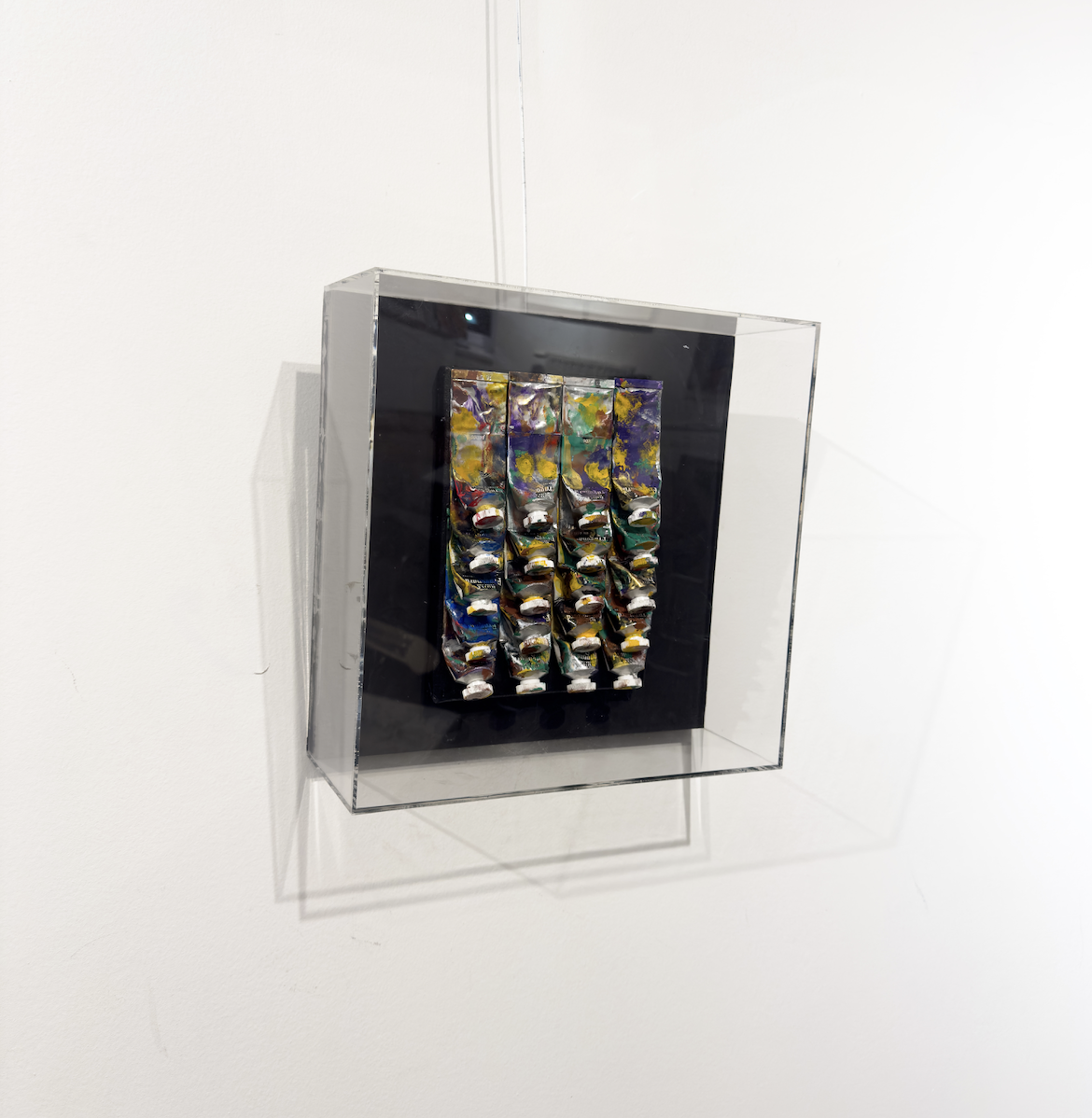
Painted Tubes on Black Canvas; Signed, dated on the upper frame edge, and numbered 10/99 verso; 30 × 30 × 11.5 cm
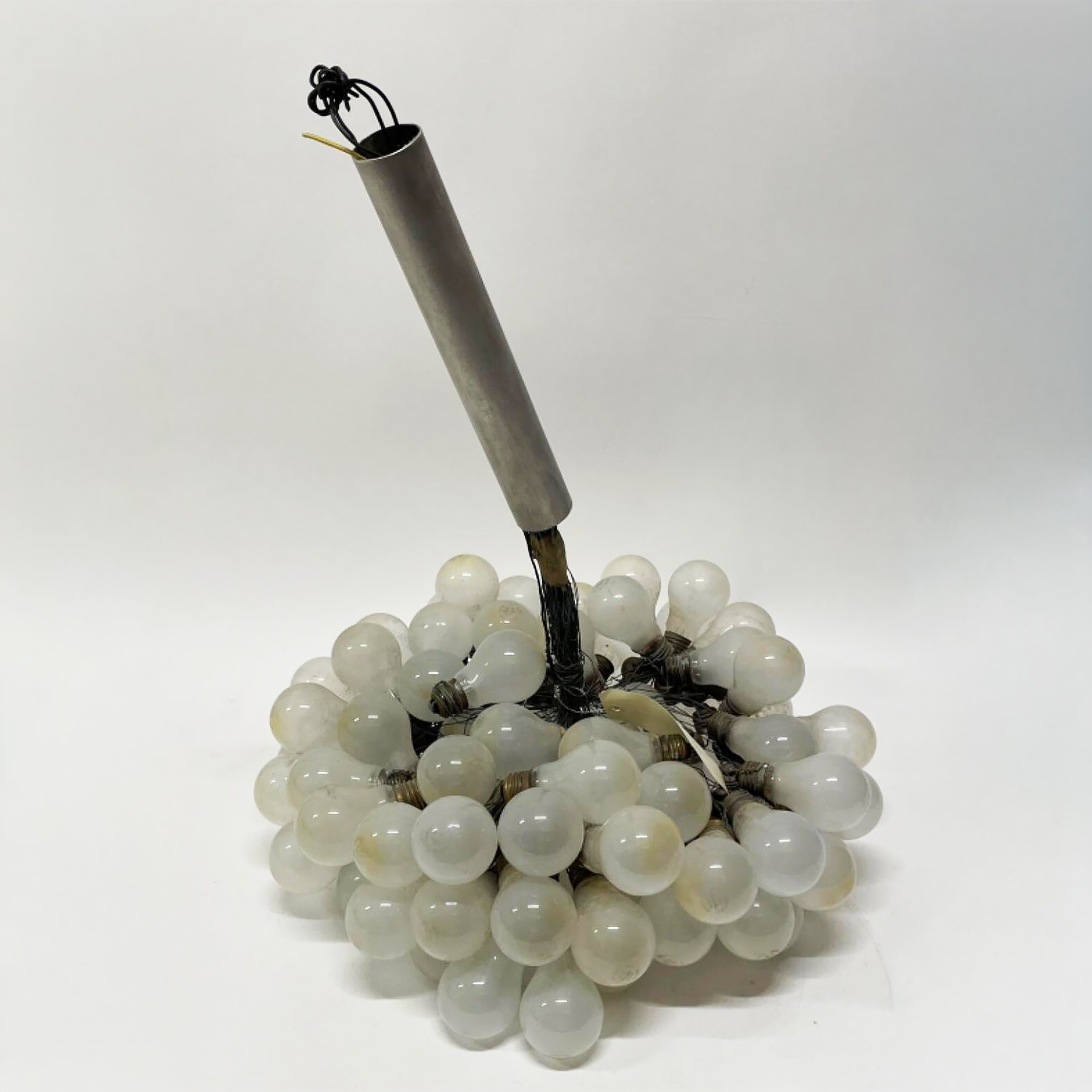
Chandelier in chromed metal with an accumulation of lightbulbs connected by wire (some accidents and losses); Height: 80 cm; Diameter: 50 cm.